
Click on the image above to learn more about the M1 Carbine
|
Springfield Armory Canning of the M1 Carbine |
Post Reply 
|
| Author | |
New2brass 
Moderator Group 

Dan Pinto, How Can I help Joined: Nov 29 2015 Location: CCC Status: Offline Points: 5527 |
 Post Options Post Options
 Thanks(0) Thanks(0)
 Quote Reply Quote Reply
 Topic: Springfield Armory Canning of the M1 Carbine Topic: Springfield Armory Canning of the M1 CarbinePosted: Oct 31 2024 at 7:34am |
|
2024-G Springfield Armory Preservation Canning of the M1 Carbine The Boston Globe Thursday, September 23, 1948 U.S. “Canning” Extra Rifles and Carbines 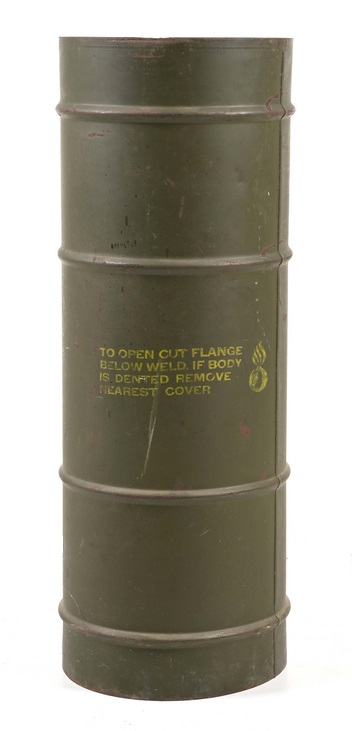 PITTSBURGH (AP) – Rifles-like rations-will come to American soldiers in cans. PITTSBURGH (AP) – Rifles-like rations-will come to American soldiers in cans.One of the latest contributions of the steel industry to the armed forces sees extra rifles and carbines being canned for later use. Army spokesmen said use of steel in barrel-like containers eliminates the need for coating new or stored arms in the cosmoline grease of World War II. That material kept many a G.I. busy for hours as he sought to put firing arms in operating use. In the future G.I.’s will get small arms the same way they get pork and beans—with a can opener. The opener is still in the experimental stage, but it apparently will look like a giant version of the familiar kitchen tool. Two circular cutting wheels will travel around the inside of the flange on the lid, exposing the stored pieces in seconds. Army officials said the plastic envelope technique used to store cannon, airplanes and battleships would not do for small arms since the latter must be able to stand rough treatment on trains and ships. The Springfield, Mass., Armory now is packing 3000 carbines and rifles a day in 300 barrels. The same technique can be applied to automatic pistols, sub-machine guns and Browning automatic rifles. “Cooked” in Kilns To make the firearms ready for instant use when the steel can is opened, the pieces are “cooked” in kilns which remove most of the moisture from the wooden stocks. Slings are dehydrated separately in another oven and the weapons are delivered to the canning plant. Carried on a conveyor, the rifles and carbines are bathed in a cleaning solvent of naphtha and in a rust-preventive. The next step is the drying oven where racks are made to hold the carbines inside the cans. Packed in each can is enough of a desiccant (moisture absorber) called silica gel to drink up the moisture packed in the can with the rifles. Otherwise, moisture in the air would attack the gun metal. Just enough gel is added to balance the absorbent qualities of the dehydrated wooden stock. After the can is welded closed and painted, a two-hour process has been completed which Army officers say will insure perfect preservation of the weapons for at least 50 years. ______________________________________________________________________ According to War Baby Comes Home page 536, War Bay 3 pg 1283, in July 1945 Springfield Armory was tasked with designing and developing a method of "canning" carbines. Over the next few years at least 5 different canning processes were developed. Originally they were using short cans where the action would be removed from the stocks and stored next to each other to fit in the short drums. Due to having to re-sight the carbines once stocked again they changed the design to fit the carbine fully assembled. Earlier methods the lids were soldered on which had some issues. Eventually a stamped, formed lipped lid was made making for a much better seal, but more difficult to open. These were less complex than the earlier fabricated parts.  Stanley Works was tasked with coming up with an electric can opener of sorts. Their device was called the "Unishear." This device would cut below the lid about one inch down the drum making the drum not resealable. The M1 rifles were also canned, starting in 1946 and completed in October 1947. The full scale canning of the M1 Carbines begun as soon as the necessary changeover of the production line could be made. As shown below a serial numbered can bearing the date of 11-47. Though some carbines were canned with the previous methods, this would be the earliest of the full scale canning of the carbines. In 1948 improvements were made to the canning, which seems to be a change in the style of marking.  The production drums were contracted to the Walsh Boiler Company. In 1948 with another contract for canned weapons other companies were also contracted. There were 254,520 carbines canned that were overhauled at Raritan Arsenal, August Arsenal, and Springfield Armory. This would suggest there were 25,452 carbine cans, which most are long lost to history. The Carbine Collectors Club Copyright© 2024 www.USCarbineCal30.com This article and/or its images are the property of the author and or the Carbine Collectors Club. They're not to be distributed or for commercial use without prior written permission (Title 17, Chapter 5, Section 501(a) U.S. Code) Edited by New2brass - Oct 31 2024 at 8:27am |
|
 |
|
|
New2brass
Moderator Group
Dan Pinto, How Can I help Joined: Nov 29 2015 Location: CCC Status: Offline Points: 5527 |
Post Options
Thanks(0)
Quote Reply
Posted: Oct 31 2024 at 4:25pm |
|
I am aware of only 3 of these cans. 2 of them Larry Ruth bought. These are at Morphy Auction with bidding till November 4th where the online only auction goes live. "Auction ends at 10pm EST 11/4/2024
After 10pm EST, extended bidding is available to bidders, on a per lot basis, who have placed a bid prior to 10pm EST. Extended bidding continues in 15 minutes increments until no other bids are placed in the allotted time period." So if you did not bid on a item you will not be able to bid in extended time. Crazy rule if you ask me. |
|
|
|
|
Steve old and gray
Recruit 
Joined: Feb 18 2025 Location: So Cal Status: Offline Points: 29 |
Post Options
Thanks(0)
Quote Reply
Posted: Feb 26 2025 at 2:17pm |
|
Remarkable! I wonder if the CMP got any of these?
|
|
|
Steve Carter
|
|
|
|
|
New2brass
Moderator Group
Dan Pinto, How Can I help Joined: Nov 29 2015 Location: CCC Status: Offline Points: 5527 |
Post Options
Thanks(1)
Quote Reply
Posted: Feb 26 2025 at 6:19pm |
|
A few years back the CMP had a carbine lottery. Many had crisp SA rebuild marks and the stocks looked very dry. Just a guess is that the Army de canned them, sent the carbines to the CMP. If they received in the can they would probably have auctioned the racks at the very least.
|
|
|
|
|
Post Reply
|
|
| Forum Jump | Forum Permissions You cannot post new topics in this forum You cannot reply to topics in this forum You cannot delete your posts in this forum You cannot edit your posts in this forum You cannot create polls in this forum You can vote in polls in this forum |


 Topic Options